How to Choose UV Resistant Acrylic Sheets for Outdoor Applications

Informational

Acrylic sheets are widely used in outdoor environments because they offer excellent clarity, lightweight properties, and strong impact resistance. However, when selecting acrylic for outdoor projects, UV resistance becomes one of the most important factors to consider.

Without proper UV protection, plastic materials can gradually lose transparency, become brittle, or develop surface discoloration after prolonged sun exposure. This is why many architects, designers, and fabricators choose UV resistant acrylic sheets for outdoor applications.

This guide explains how to choose the right acrylic sheets for outdoor environments to ensure durability and long-term performance.

1. Look for Built-In UV Resistance

The most important feature of outdoor acrylic sheets is UV stability.

UV resistant acrylic sheets are specially formulated to withstand long-term exposure to sunlight without significant degradation. This helps prevent common issues such as:

  • Yellowing or discoloration
  • Surface cracking
  • Reduced transparency
  • Material brittleness

High-quality acrylic sheets can maintain their optical clarity and structural strength for many years, even in outdoor conditions.

Read also: Cost Breakdown: How Acrylic Can Help You Save Budget in Long-Term Projects

2. Consider the Application Requirements

Different outdoor applications require different types of acrylic sheets. Before choosing a material, it is important to understand how the acrylic will be used.

Common outdoor applications include:

  • Outdoor signage and advertising panels
  • Architectural panels and skylights
  • Protective barriers
  • Greenhouse panels
  • Display cases and retail signage

For signage and display purposes, high transparency and surface quality are essential. For structural or protective panels, impact resistance and thickness may be more important.

3. Choose the Right Thickness

Acrylic sheets are available in various thickness options, typically ranging from a few millimeters to much thicker panels for industrial use.

For outdoor applications:

  • 3–5 mm sheets are commonly used for signage and display panels
  • 6–10 mm sheets are suitable for structural panels and partitions
  • Thicker sheets may be required for heavy-duty installations

Selecting the correct thickness helps ensure stability, durability, and resistance to environmental stress.

Read also: How to Identify High-Quality Cast Acrylic Sheets | Buyer’s Guide

4. Evaluate Optical Clarity and Surface Quality

One of the biggest advantages of acrylic over other materials is its excellent optical clarity. High-quality acrylic sheets can offer transparency levels of up to 92% light transmission, which is even higher than glass.

For outdoor branding or display applications, consistent surface quality is essential to maintain a clean and professional appearance.

Poor-quality sheets may have issues such as:

  • Uneven surfaces
  • Distortion
  • Lower transparency

These problems can affect both aesthetics and performance.

5. Choose Reliable Acrylic Sheet Manufacturers

The quality of acrylic sheets depends greatly on the manufacturing process and raw materials used. Reliable manufacturers typically provide consistent thickness, strong molecular structure, and better long-term durability.

For projects that require high performance and stability, cast acrylic sheets are often preferred because they offer better strength, chemical resistance, and fabrication quality compared to lower-grade alternatives.

Conclusion

Choosing the right UV resistant acrylic sheet for outdoor use ensures your project remains durable, visually appealing, and functional for years.

When selecting acrylic sheets for outdoor environments, consider the following factors:

  • UV resistance
  • Thickness and strength
  • Optical clarity
  • Application requirements
  • Manufacturer reliability

By selecting high-quality acrylic sheets designed for outdoor performance, you can reduce maintenance costs and improve the lifespan of your project.

News Release

Types of Acrylic: Complete Guide to Different Acrylic Sheets and Their Uses

The main types of acrylic include cast acrylic, extruded acrylic, clear acrylic, colored acrylic, frosted acrylic, and mirrored acrylic.

Each type offers different characteristics, making them suitable for specific fabrication, signage, and decorative applications.

Understanding the different types of acrylic is important when selecting the right material for your project.

What is Acrylic?

Acrylic is a transparent thermoplastic material widely used as an alternative to glass. It is known for its excellent clarity, lightweight structure, and fabrication flexibility.

Compared to glass, acrylic is:

  • More impact resistant
  • Easier to fabricate
  • Lighter in weight
  • Available in various finishes and colors

These qualities make acrylic sheets popular across industries such as retail, construction, interior design, and manufacturing.

Read also: Best Acrylic Thickness for Ornaments: Size Guide for Perfect Results

1. Cast Acrylic

Cast acrylic is produced by pouring liquid acrylic into molds before curing.

This type is known for:

  • Excellent optical clarity
  • Better chemical resistance
  • Superior engraving quality
  • Stronger surface hardness

Cast acrylic is commonly used for:

  • Signage
  • Premium displays
  • Laser engraving
  • Decorative applications

Because of its high-quality finish, cast acrylic is often preferred for projects that require precision and aesthetics.

2. Extruded Acrylic

Extruded acrylic is manufactured through a continuous production process.

Compared to cast acrylic, it offers:

  • More affordable pricing
  • Consistent thickness
  • Easier thermoforming

It is commonly used for:

  • General fabrication
  • Protective panels
  • Cost-efficient production projects

While extruded acrylic is softer than cast acrylic, it remains a practical choice for many standard applications.

3. Clear Acrylic

Clear acrylic sheets are the most commonly used type.

They provide:

  • High transparency
  • Glass-like appearance
  • Smooth surface finish

Applications include:

  • Retail displays
  • Aquariums
  • Protective barriers
  • Signage

Clear acrylic is ideal when visibility and a clean aesthetic are priorities.

4. Colored Acrylic

Colored acrylic sheets are available in a wide range of solid and transparent colors.

Benefits include:

  • Consistent color throughout the sheet
  • Strong visual appeal
  • Better branding flexibility

Colored acrylic is often used for:

  • Decorative ornaments
  • Branding elements
  • Interior accents
  • Creative fabrication projects

5. Frosted Acrylic

Frosted acrylic features a matte surface that diffuses light. It is commonly selected for:

  • Privacy panels
  • Minimalist interior design
  • Elegant signage

Its soft appearance helps reduce glare and fingerprints.

6. Mirrored Acrylic

Mirrored acrylic provides a reflective surface similar to traditional mirrors but with lighter weight and better impact resistance.

Common applications include:

  • Decorative panels
  • Retail displays
  • Event decorations

It is available in various finishes such as silver, gold, and colored mirror effects.

How to Choose the Right Acrylic Type

Choosing the right acrylic depends on:

  • Application purpose
  • Fabrication method
  • Desired appearance
  • Budget considerations

For example:

  • Cast acrylic → better for engraving and premium designs
  • Extruded acrylic → suitable for cost-efficient fabrication
  • Frosted acrylic → ideal for elegant and modern finishes

Read also: Acrylic vs Glass for Plaque: Which Material is Better?

Why Material Quality Matters

High-quality acrylic sheets provide:

  • Better clarity
  • Consistent thickness
  • Improved fabrication performance

Using reliable materials helps reduce production issues and ensures professional results.

Marga Cipta supplies premium acrylic sheets in various types and finishes to support different fabrication and design needs.

Conclusion

Understanding the different types of acrylic helps you select the right material for your project.

From clear and colored acrylic to cast and mirrored finishes, each type offers unique advantages for specific applications. By choosing high-quality acrylic sheets, businesses and manufacturers can achieve more durable and visually appealing results.

Ready to explore our cast acrylic options? At Margacipta Wirasentosa, we offer high-quality clear cast acrylic sheets from 100% virgin MMA in various thicknesses and custom sizes to fit your needs.

Reach out to our Instagram or download our Product Catalog for more information.

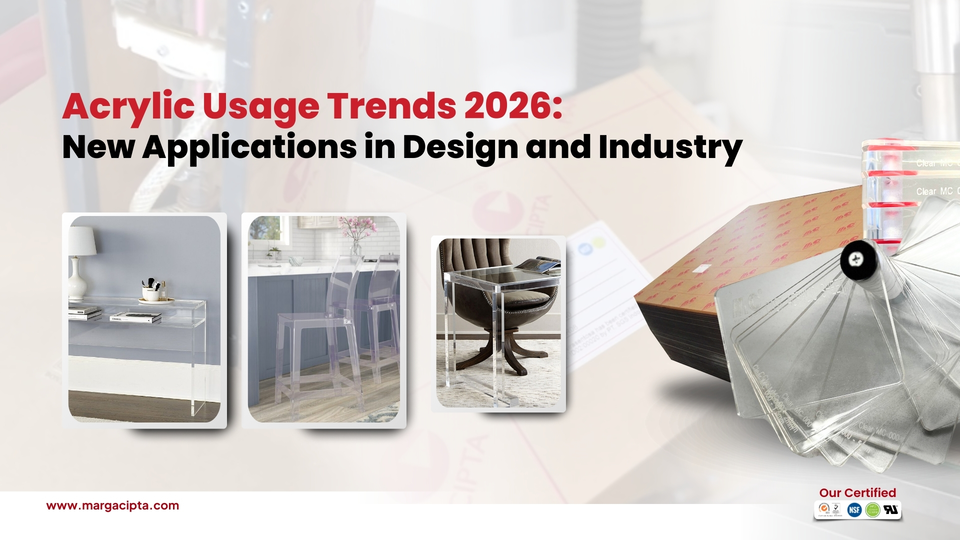
Acrylic Usage Trends 2026: New Applications in Design and Industry

Acrylic continues to gain momentum as one of the most versatile materials across design, construction, and manufacturing industries. Known for being lightweight, strong, highly transparent, and easy to fabricate, acrylic is increasingly replacing traditional materials such as glass and metal.

As we move into 2026, acrylic is no longer limited to signage or displays. Its applications are expanding rapidly, opening new opportunities for businesses, designers, architects, and manufacturers. Below are the key acrylic usage trends predicted to shape design and industry in 2026.

Trend 1: Acrylic Interior Panels

One of the strongest acrylic usage trends in 2026 is the rise of acrylic interior panels for both commercial and residential buildings.

Why this trend is growing:

The rapid development of offices, retail spaces, hotels, and modern housing has increased demand for materials that are visually appealing, durable, and cost-efficient. Acrylic interior panels offer high clarity and a sleek, minimalistic look, making them ideal for partitions, wall panels, and decorative elements.

Compared to glass, acrylic is more affordable, lighter, and easier to install. Designers and architects also favor acrylic for its flexibility in color, thickness, and finish, allowing them to create modern interior concepts without compromising safety or aesthetics.

Read also: 100% Virgin MMA: The Key to High-Quality Acrylic Sheets

Trend 2: LED Signage and Display Systems

LED signage remains one of the most dominant acrylic applications heading into 2026.

Why this trend continues to rise:

Offline retail transformation is still strong, particularly in developing markets where physical stores continue to evolve. Many small and medium-sized businesses are renovating storefronts and upgrading visual branding, increasing demand for LED signage and display systems.

Acrylic is the preferred material for LED signage due to its excellent light transmission, smooth surface, and ability to diffuse light evenly. From illuminated logos and lightboxes to promotional displays, acrylic helps businesses create brighter, more attractive visual communication.

Trend 3: Acrylic Greenhouse Panels

Sustainability and food security are driving the growth of urban farming, hydroponics, and smart agriculture—making acrylic greenhouse panels a key trend in 2026.

Why this trend is emerging:

Acrylic offers superior UV resistance, high transparency, and better impact strength compared to glass. These properties make it ideal for greenhouse roofs and walls, where consistent light transmission and durability are essential.

As urban farming expands into rooftops, compact land areas, and controlled environments, acrylic greenhouse panels provide a long-lasting, lightweight solution that supports plant growth while reducing maintenance costs.

Read also: Food Grade Acrylic: Safe Choice for Your F&B Business

Trend 4: Furniture, Home Décor, and Small Products

Acrylic furniture and decorative items are gaining popularity, influenced heavily by social media-driven interior trends.

Why this trend is accelerating:

Clean, modern, and minimalist interiors are in high demand, and acrylic fits perfectly into this aesthetic. Furniture such as acrylic chairs, tables, shelves, and decorative panels offers a contemporary look without making spaces feel heavy.

In addition, e-commerce sellers increasingly use acrylic for DIY products and small household items. Consumers prefer materials that are lightweight, modern, durable, and visually appealing—qualities that acrylic delivers consistently.

Acrylic: A Material with Expanding Relevance

The versatility of acrylic makes it increasingly relevant across industries beyond traditional applications. From architecture and retail to agriculture and lifestyle products, acrylic continues to adapt to changing market needs.

To support these growing demands, choosing a high-quality material is essential. MC® Cast Acrylic Sheet is a proven solution, offering consistent clarity, strength, and fabrication performance for both design and industrial applications.

Conclusion

Acrylic usage trends in 2026 highlight a clear shift toward materials that combine aesthetics, durability, and flexibility. Interior panels, LED signage, greenhouse systems, and furniture are just a few examples of how acrylic is shaping the future of design and industry.

By leveraging reliable materials like MC® Cast Acrylic Sheet, businesses can stay ahead of trends and unlock new opportunities in an evolving market.

Custom Acrylic Sheet Supplier in Indonesia: How to Choose the Right Partner

As demand for acrylic products continues to grow, finding a reliable custom acrylic sheet supplier in Indonesia becomes increasingly important.

Whether for retail displays, signage, construction, or industrial use, choosing the right supplier can significantly impact your project’s quality and efficiency.

But with many options available, how do you choose the right partner?

Why Choosing the Right Supplier Matters

A good supplier does more than just provide materials. They ensure:

  • Consistent product quality
  • Accurate customization
  • Reliable delivery timelines
  • Professional support and consultation

Working with the wrong supplier can lead to delays, poor results, and higher costs.

Find out key factors to consider and how to find a good acrylic supplier for your needs.

Read more: 100% Virgin MMA: The Key to High-Quality Acrylic Sheets

Key Factors to Consider

1. Product Quality

High-quality acrylic should have:

  • Excellent clarity
  • Smooth surface finish
  • Strong durability

Always check if the supplier offers cast acrylic for premium applications.

2. Customization Capability

A reliable supplier should provide:

  • Custom cutting and sizing
  • Bending and forming
  • Laser cutting

This is crucial for projects that require precise specifications.

3. Variety of Options

Choose a supplier that offers:

  • Multiple thickness options
  • Clear, colored, and frosted acrylic
  • Different acrylic types for various applications

More options mean better flexibility for your project.

4. Experience and Reputation

Look for suppliers with:

  • Proven track record
  • Positive client feedback
  • Experience in handling diverse industries

Experienced suppliers are more likely to understand your needs.

5. Lead Time and Availability

Timely delivery is essential, especially for business projects. Ensure the supplier can:

  • Meet deadlines
  • Maintain consistent stock availability

Read also: Does Acrylic Shatter? Find Out Its Strength and Durability

Questions to Ask Before Choosing

  • Do they provide custom fabrication services?
  • What types of acrylic do they offer?
  • Can they handle bulk orders?
  • How fast is their production and delivery time?

Common Mistakes to Avoid

  • Choosing based on price alone
  • Ignoring material specifications
  • Not verifying supplier credibility

These can result in poor-quality output and project delays.

Benefits of Working with a Professional Supplier

A trusted supplier helps you:

  • Achieve precise results
  • Reduce material waste
  • Improve overall project quality

They act as a partner, not just a vendor.

Conclusion

Choosing the right custom acrylic sheet supplier in Indonesia requires careful consideration of quality, capability, and reliability.

Need a trusted acrylic partner?

Marga Cipta offers custom acrylic sheet solutions with various types, sizes, and fabrication options to support your project needs. Work with a supplier that understands quality and precision.

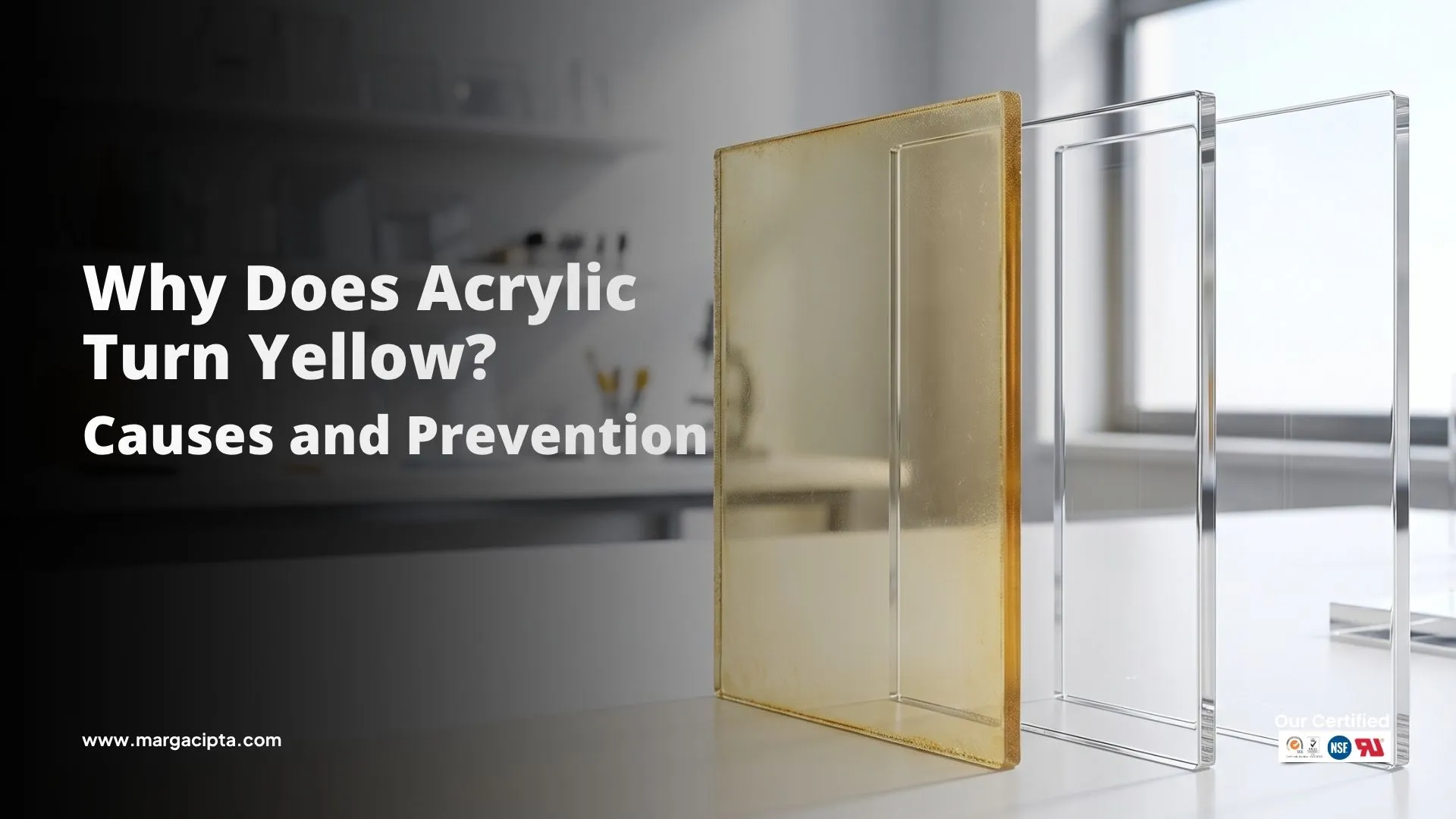
Why Does Acrylic Turn Yellow? Causes and Prevention

High-quality acrylic sheets are highly resistant to yellowing, but certain environmental conditions and material quality can affect their appearance over time. 

If acrylic becomes yellow, it is often due to prolonged UV exposure, harsh chemicals, excessive heat, or the use of low-quality materials.

Understanding why acrylic turns yellow can help businesses and fabricators choose the right material and maintain its clarity for years.

Does Acrylic Naturally Turn Yellow?

Unlike some plastics, acrylic is well known for its excellent optical clarity and UV resistance.

Premium cast acrylic sheets are manufactured to withstand outdoor exposure while maintaining their transparency and color stability. In many applications, high-quality acrylic can remain clear for years with proper care.

However, not all acrylic sheets offer the same level of performance.

Read also: Best Way to Glue Acrylic Sheet: Adhesives and Application Tips

Common Causes of Acrylic Yellowing

1. Prolonged UV Exposure

Although acrylic is naturally UV-resistant, continuous exposure to intense sunlight over many years may gradually affect lower-quality materials.

UV radiation can accelerate material aging, especially if the acrylic is not designed for outdoor applications.

Using UV-resistant acrylic sheets helps minimize this risk.

2. Poor Material Quality

Material quality is one of the biggest factors influencing long-term appearance.

Lower-quality acrylic may:

  • Yellow more quickly
  • Lose transparency
  • Become brittle over time
  • Develop surface imperfections

Premium cast acrylic generally provides better color stability and weather resistance.

3. Harsh Cleaning Chemicals

Cleaning acrylic with unsuitable chemicals may damage its surface.

Avoid using:

  • Ammonia-based cleaners
  • Strong solvents
  • Alcohol-based cleaners
  • Abrasive cleaning products

These chemicals can weaken the surface and contribute to discoloration over time.

Instead, use acrylic-safe cleaners and a soft microfiber cloth.

4. Excessive Heat

Exposure to high temperatures for extended periods can accelerate the aging process of acrylic.

While acrylic performs well in many environments, excessive heat combined with UV exposure may gradually reduce its visual quality.

5. Improper Storage

Storing acrylic sheets in unsuitable environments can also affect their appearance.

To maintain quality:

  • Store sheets indoors when possible
  • Keep them away from excessive sunlight before installation
  • Protect surfaces from dust and contaminants

Proper storage helps preserve the material before fabrication.

How to Prevent Acrylic from Turning Yellow

The best way to maintain acrylic clarity is through proper material selection and maintenance.

Recommended practices include:

  • Choose premium UV-resistant acrylic sheets.
  • Clean using acrylic-safe cleaning solutions.
  • Avoid harsh chemicals and abrasive tools.
  • Install the correct acrylic grade for outdoor applications.
  • Follow manufacturer recommendations for handling and maintenance.

These simple steps can significantly extend the lifespan of acrylic products.

Why High-Quality Acrylic Matters

Premium acrylic sheets offer several long-term advantages, including:

  • Excellent UV resistance
  • Superior optical clarity
  • Better weather durability
  • Improved color stability
  • Consistent performance over time

Choosing high-quality acrylic helps reduce maintenance and improves the longevity of finished products.

Marga Cipta manufactures premium cast acrylic sheets suitable for signage, displays, architectural features, retail applications, and other projects that require long-lasting clarity and performance.

Read also: How Long Does Acrylic Last Outdoors? Lifespan, UV Resistance, and Maintenance

Conclusion

So, why does acrylic turn yellow? In most cases, yellowing is caused by prolonged UV exposure, harsh chemicals, excessive heat, or poor material quality.

By selecting premium UV-resistant acrylic sheets and following proper maintenance practices, businesses can keep acrylic products clear, durable, and visually appealing for many years.

Choose High-Quality Acrylic for Long-Lasting Performance

Marga Cipta offers premium cast acrylic sheets designed for excellent clarity, weather resistance, and durability across a wide range of applications.

For inquiries or orders, email info@margacipta.com.

For product updates, inspiration, and application ideas, follow Instagram @margacipta.